Question

Why Do I Replay Conversations in My Head?

Listen to the ceiling for a moment. The room is quiet, but one sentence starts making weather. A pause gathers pressure. A laugh turns electric. The goodbye you gave hours ago darkens at the edges. You ask the smallest question first: was it the wrong thing to say? Maybe, you think, if you replay it precisely enough, the air will clear. But the night offers its first contradiction: if this were only about accuracy, the tenth replay would not feel worse than the first.

A weather system forms around one sentence in the dark.

Feeling

The House That Listens After You Speak

Come closer to the ache under the cringe. It is not merely embarrassment. It is the old house inside you listening for footsteps after you have spoken. One room wants to be known. Another bolts the door the second you become visible. You tell yourself you want a cleaner script, a sharper comeback, a less awkward exit. Yet the deeper want is harsher: proof that being seen did not cost you your place. So you begin sanding down every edge that might have touched someone strangely.

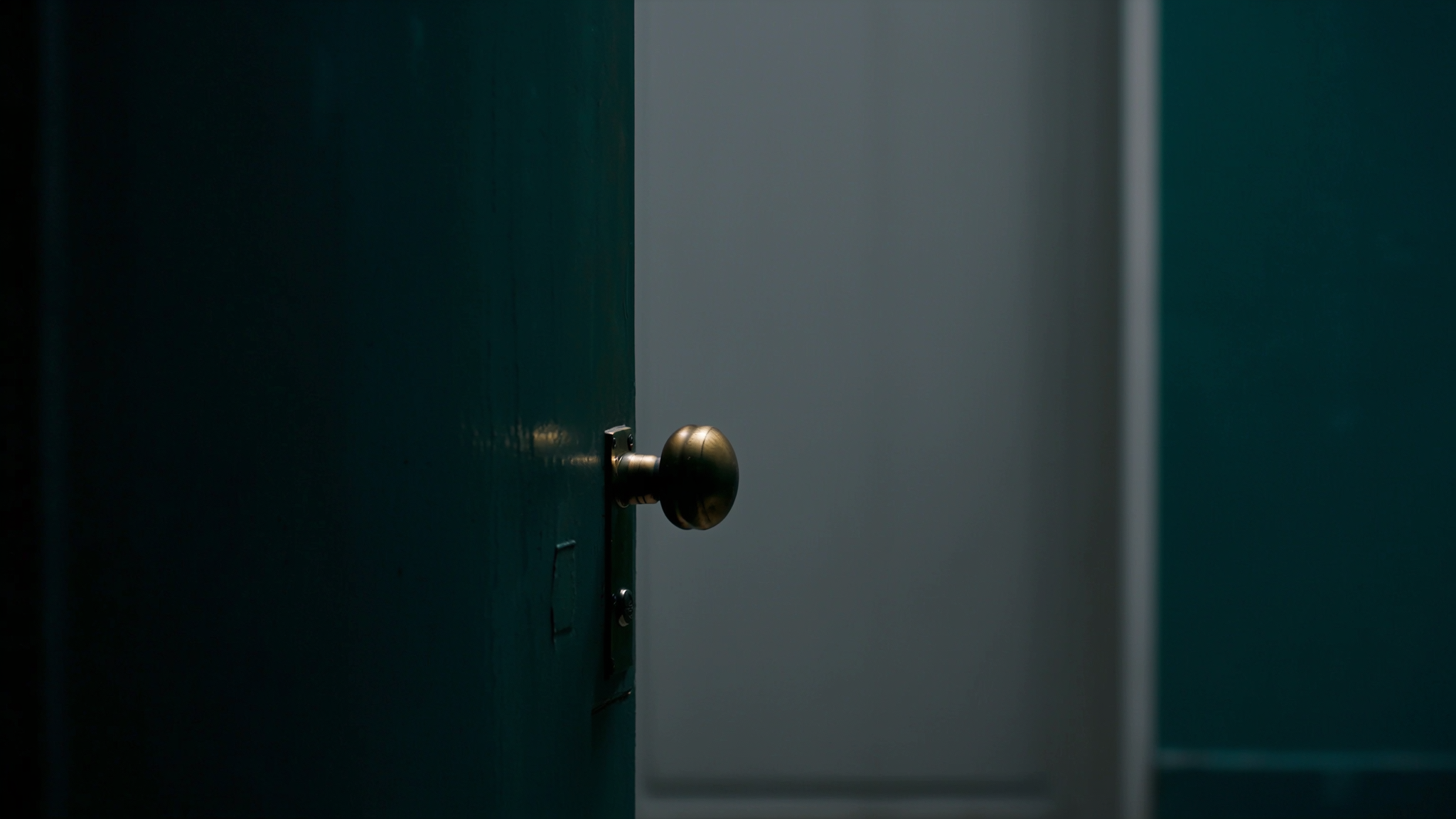
In the house of your chest, every doorway becomes a test.

Mechanism

You Are Not Reviewing. You Are Running Surveillance.

Stop calling it reflection. Reflection ends when it finds a lesson. This keeps feeding. The protector in you drags the moment onto a belt and runs it through blades: the joke, the pause, the expression, the possible meaning of their silence. It says, criticize first and rejection will arrive dulled. It wins tonight. You obey. You edit your face, your tone, your future self. The cost is not sleep alone; it is spontaneity, warmth, and the unguarded part of you that connection would have needed.

The machine says: revise, reduce, survive.
Evidence

The Mirror Is Not Evidence

Clinically, the pattern has a name: post-event processing. After socially loaded moments, attention returns not to the whole encounter, but to selected threat fragments. The mind enlarges awkwardness, infers judgement, and treats uncertainty as data. Here is the deception: the process presents itself as learning while producing no stable lesson. Shame rises. Doubt multiplies. The protector wins again by narrowing the evidence to whatever condemns you. What you call memory is now an instrument with a warped surface.

The mirror records the fear, then calls it evidence.

Realisation

The Trial Was Never About the Sentence

Then it breaks. Not the memory. The bargain. You were not searching for the perfect line. You were trying to enter their private mind and seize the verdict before it could strike. Trial first. Punishment first. Shame as preparation. Control disguised as remorse. And there it is: the imagined jury never needed to speak. You wrote the charge. You gave the sentence. You became the witness, the prosecutor, the judge. Every night, you win against yourself. Every night, closeness loses.

The courtroom splits; the judge has been wearing your face.

Resolution

Leave the Verdict in the Dark

Morning does not make the conversation perfect. It gives the past a different keeper. The protective part still raises its hand: review it again or you will repeat it. This time, the answer is earned, not easy. Repair what is real. Apologize if there is something specific to mend. Learn the one lesson that can actually be used. Then leave the unknown thoughts of other people with them. Connection cannot survive being cross-examined into certainty. You step forward lighter because the verdict is no longer your job.

Dawn does not change the past. It changes who is allowed to hold it.

A weather system forms around one sentence in the dark. In the house of your chest, every doorway becomes a test. The machine says: revise, reduce, survive. The mirror records the fear, then calls it evidence. The courtroom splits; the judge has been wearing your face. Dawn does not change the past. It changes who is allowed to hold it.

Evidence

FAQs

Why do I replay conversations before sleep?
Because the mind treats social belonging as high stakes. At night, with fewer distractions, it may scan old conversations for signs of danger.
Is replaying conversations the same as learning from them?
Sometimes reflection helps. But if the replay increases shame, doubt, and imaginary arguments without producing a clear action, it has likely become rumination.
How do I stop the loop?
Ask: is there a real repair to make? If yes, choose one concrete action. If no, name the rest as imagined judgement and refuse to keep cross-examining it.

Understand it on screen

Watch on YouTube →

Related journeys

Why do I replay conversations at night and imagine what I should have said?Why do I replay conversations at night and imagine what I should have said?Why does rejection physically hurt in my chest and stomach?Why does rejection physically hurt in my chest and stomach?Why am I scared of becoming successful?Why am I scared of becoming successful?Why do I replay embarrassing memories and regrets at night?Why do I replay embarrassing memories and regrets at night?Why do I keep going back to bad habits after I stop?Why do I keep going back to bad habits after I stop?Why do I feel lonely even when I’m around friends or family?Why do I feel lonely even when I’m around friends or family?